
 Informations touristiques
(Optimisée pour appareils à petit écran)
The Old Village and the Hollókő Castle - Hollókő, Hongrie
Lorsque vous cliquez:
Cliquez sur les images !
-

"Portéka" gift shop
This former dwelling house was burned in 1909 and also in 1926, but fortunatelly it could be restored.
Date de la photographie: 20092009
Créé par: Robert Németh
Modèle d'appareil photo: Konica Minolta Dimage A200
Hollókő, Hongrie
-

A street paved with natural stone, decorated with geranium flowers
Date de la photographie: 20092009
Créé par: Robert Németh
Modèle d'appareil photo: Konica Minolta Dimage A200
Hollókő, Hongrie
-

View of the World Heritage village, with spring flowers
Date de la photographie: 20092009
Créé par: Robert Németh
Modèle d'appareil photo: Konica Minolta Dimage A200
Hollókő, Hongrie
-

The border of the village with the Nógrád Hills and flowering fruit trees
Date de la photographie: 20092009
Créé par: Robert Németh
Modèle d'appareil photo: Konica Minolta Dimage A200
Hollókő, Hongrie
-

A metal sculpture, representing a raven who sits on a rock, at the Hollókő-Zsunypuszta-Felsőtold crossroads
Created by Dávid Tóth in 2008
Date de la photographie: 20092009
Créé par: Robert Németh
Modèle d'appareil photo: Konica Minolta Dimage A200
Hollókő, Hongrie
-

Iron statue of a black bird (a raven) on a rock at the crossroads, with the logo of the UNESCO World Heritage Site
Date de la photographie: 20092009
Créé par: Robert Németh
Modèle d'appareil photo: Konica Minolta Dimage A200
Hollókő, Hongrie
-

The iron raven statue at the crossroads refers to the name of the village (the Hungarian word "Holló-kő" means "raven rock")
Created by Dávid Tóth in 2008
Date de la photographie: 20092009
Créé par: Robert Németh
Modèle d'appareil photo: Konica Minolta Dimage A200
Hollókő, Hongrie
-

Information board of the Old Village ("Ófalu")
Date de la photographie: 20092009
Créé par: Robert Németh
Modèle d'appareil photo: Konica Minolta Dimage A200
Hollókő, Hongrie
-

Summer kitchen, an old furnace and bread-maker
Date de la photographie: 20092009
Créé par: Robert Németh
Modèle d'appareil photo: Konica Minolta Dimage A200
Hollókő, Hongrie
-

Sign at the croft of a handicraftsman
Date de la photographie: 20092009
Créé par: Robert Németh
Modèle d'appareil photo: Konica Minolta Dimage A200
Hollókő, Hongrie
-
Former dwelling house, today the Craftsman's house (workshop and "folk-playground")
Date de la photographie: 20092009
Créé par: Robert Németh
Modèle d'appareil photo: Konica Minolta Dimage A200
Hollókő, Hongrie
Former dwelling house, today the Craftsman's house (workshop and "folk-playground") - Hollókő, Hongrie -
A "Jug tree" (tree decorated with potteries, in Hungarian "köcsögfa") in a garden
Date de la photographie: 20092009
Créé par: Robert Németh
Modèle d'appareil photo: Konica Minolta Dimage A200
Hollókő, Hongrie
A "Jug tree" (tree decorated with potteries, in Hungarian "köcsögfa") in a garden - Hollókő, Hongrie -
"Muskátli" restaurant in the old dwelling house
Date de la photographie: 20092009
Créé par: Robert Németh
Modèle d'appareil photo: Konica Minolta Dimage A200
Hollókő, Hongrie
"Muskátli" restaurant in the old dwelling house - Hollókő, Hongrie -
The wooden shingle roof St. Martin's Church
It was built in 1889
Date de la photographie: 20092009
Créé par: Robert Németh
Modèle d'appareil photo: Konica Minolta Dimage A200
Hollókő, Hongrie
The wooden shingle roof St. Martin's Church - Hollókő, Hongrie -
Interior of the St. Martin's Roman Catholic Church
Date de la photographie: 20092009
Créé par: Robert Németh
Modèle d'appareil photo: Konica Minolta Dimage A200
Hollókő, Hongrie
Interior of the St. Martin's Roman Catholic Church - Hollókő, Hongrie -
House with a porch
Date de la photographie: 20092009
Créé par: Robert Németh
Modèle d'appareil photo: Konica Minolta Dimage A200
Hollókő, Hongrie
House with a porch - Hollókő, Hongrie -
"Mívesház" (in English "Ornate Cottage"), Palóc folk costume and folk ceramics on the wall
Date de la photographie: 20092009
Créé par: Robert Németh
Modèle d'appareil photo: Konica Minolta Dimage A200
Hollókő, Hongrie
"Mívesház" (in English "Ornate Cottage"), Palóc folk costume and folk ceramics on the wall - Hollókő, Hongrie -
Gift shop in the "Mívesház" ("Ornate Cottage")
Date de la photographie: 20092009
Créé par: Robert Németh
Modèle d'appareil photo: Konica Minolta Dimage A200
Hollókő, Hongrie
Gift shop in the "Mívesház" ("Ornate Cottage") - Hollókő, Hongrie -
"Fazekasház" (in English the "Pottery House" or the "House of the potter")
Date de la photographie: 20092009
Créé par: Robert Németh
Modèle d'appareil photo: Konica Minolta Dimage A200
Hollókő, Hongrie
"Fazekasház" (in English the "Pottery House" or the "House of the potter") - Hollókő, Hongrie -
Potter's House ("Fazekasház")
Date de la photographie: 20092009
Créé par: Robert Németh
Modèle d'appareil photo: Konica Minolta Dimage A200
Hollókő, Hongrie
Potter's House ("Fazekasház") - Hollókő, Hongrie -
Pottery House ("Fazekasház")
Date de la photographie: 20092009
Créé par: Robert Németh
Modèle d'appareil photo: Konica Minolta Dimage A200
Hollókő, Hongrie
Pottery House ("Fazekasház") - Hollókő, Hongrie -
Hollókő Castle
Date de la photographie: 20092009
Créé par: Robert Németh
Modèle d'appareil photo: Konica Minolta Dimage A200
Hollókő, Hongrie
Hollókő Castle - Hollókő, Hongrie -
Castle of Hollókő
Date de la photographie: 20092009
Créé par: Robert Németh
Modèle d'appareil photo: Konica Minolta Dimage A200
Hollókő, Hongrie
Castle of Hollókő - Hollókő, Hongrie -
Outer and inner castle wall, and the Old Tower, viewed from the entrance
Date de la photographie: 20092009
Créé par: Robert Németh
Modèle d'appareil photo: Konica Minolta Dimage A200
Hollókő, Hongrie
Outer and inner castle wall, and the Old Tower, viewed from the entrance - Hollókő, Hongrie -
A cistern (water tank) and former outbuildings on the outer castle-courtyard
Date de la photographie: 20092009
Créé par: Robert Németh
Modèle d'appareil photo: Konica Minolta Dimage A200
Hollókő, Hongrie
A cistern (water tank) and former outbuildings on the outer castle-courtyard - Hollókő, Hongrie -
The floorplan of the castle, the map of its rooms and premises
Date de la photographie: 20092009
Créé par: Robert Németh
Modèle d'appareil photo: Konica Minolta Dimage A200
Hollókő, Hongrie
The floorplan of the castle, the map of its rooms and premises - Hollókő, Hongrie -
Western wing of the palace
Date de la photographie: 20092009
Créé par: Robert Németh
Modèle d'appareil photo: Konica Minolta Dimage A200
Hollókő, Hongrie
Western wing of the palace - Hollókő, Hongrie -
Visitors in the castle
Date de la photographie: 20092009
Créé par: Robert Németh
Modèle d'appareil photo: Konica Minolta Dimage A200
Hollókő, Hongrie
Visitors in the castle - Hollókő, Hongrie -
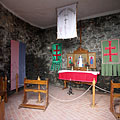
Furnished small chapel with flags, in the western wing of the palace
Date de la photographie: 20092009
Créé par: Robert Németh
Modèle d'appareil photo: Konica Minolta Dimage A200
Hollókő, Hongrie
Furnished small chapel with flags, in the western wing of the palace - Hollókő, Hongrie -
Entry to the inner castle courtyard
Date de la photographie: 20092009
Créé par: Robert Németh
Modèle d'appareil photo: Konica Minolta Dimage A200
Hollókő, Hongrie
Entry to the inner castle courtyard - Hollókő, Hongrie -
Looking down to the inner castle walls from the Old Tower
Date de la photographie: 20092009
Créé par: Robert Németh
Modèle d'appareil photo: Konica Minolta Dimage A200
Hollókő, Hongrie
Looking down to the inner castle walls from the Old Tower - Hollókő, Hongrie -
Verdant trees on the hills, the awakening of the nature in April, around the Castle of Hollókő
Date de la photographie: 20092009
Créé par: Robert Németh
Modèle d'appareil photo: Konica Minolta Dimage A200
Hollókő, Hongrie
Verdant trees on the hills, the awakening of the nature in April, around the Castle of Hollókő - Hollókő, Hongrie -
View to the village from Castle of Hollókő (the stone building is not part of the castle, this is just the restrooms)
Date de la photographie: 20092009
Créé par: Robert Németh
Modèle d'appareil photo: Konica Minolta Dimage A200
Hollókő, Hongrie
View to the village from Castle of Hollókő (the stone building is not part of the castle, this is just the restrooms) - Hollókő, Hongrie -
The small Palóc village, nestled in the Nógrád Hills, viewed from the Castle of Hollókő
Date de la photographie: 20092009
Créé par: Robert Németh
Modèle d'appareil photo: Konica Minolta Dimage A200
Hollókő, Hongrie
The small Palóc village, nestled in the Nógrád Hills, viewed from the Castle of Hollókő - Hollókő, Hongrie -
Glimpse to the newer houses of the village, from the Casle of Hollókő
Date de la photographie: 20092009
Créé par: Robert Németh
Modèle d'appareil photo: Konica Minolta Dimage A200
Hollókő, Hongrie
Glimpse to the newer houses of the village, from the Casle of Hollókő - Hollókő, Hongrie -
View of the Old Village and the wooden steeple of the St. Martin's Church, from the Castle of Hollókő
Date de la photographie: 20092009
Créé par: Robert Németh
Modèle d'appareil photo: Konica Minolta Dimage A200
Hollókő, Hongrie
View of the Old Village and the wooden steeple of the St. Martin's Church, from the Castle of Hollókő - Hollókő, Hongrie -
An old tree on the forest path beween the Old Village and the Castle
Date de la photographie: 20092009
Créé par: Robert Németh
Modèle d'appareil photo: Konica Minolta Dimage A200
Hollókő, Hongrie
An old tree on the forest path beween the Old Village and the Castle - Hollókő, Hongrie -
Yellow spring flowers at the border of the Old Village
Date de la photographie: 20092009
Créé par: Robert Németh
Modèle d'appareil photo: Konica Minolta Dimage A200
Hollókő, Hongrie
Yellow spring flowers at the border of the Old Village - Hollókő, Hongrie -
A craft store on the left, and an ice cream shop ahead, on the medieval-like cobbled moody street
Date de la photographie: 20092009
Créé par: Robert Németh
Modèle d'appareil photo: Konica Minolta Dimage A200
Hollókő, Hongrie
A craft store on the left, and an ice cream shop ahead, on the medieval-like cobbled moody street - Hollókő, Hongrie -
A Palóc nationality woman sells souvenirs (for example small Palóc dolls)
Date de la photographie: 20092009
Créé par: Robert Németh
Modèle d'appareil photo: Konica Minolta Dimage A200
Hollókő, Hongrie
A Palóc nationality woman sells souvenirs (for example small Palóc dolls) - Hollókő, Hongrie -
A draw well and verdant raspberry bushes
Date de la photographie: 20092009
Créé par: Robert Németh
Modèle d'appareil photo: Konica Minolta Dimage A200
Hollókő, Hongrie
A draw well and verdant raspberry bushes - Hollókő, Hongrie




Cliquez sur les images !
Caractéristiques, propriétés
Emplacement:
Coordonnées GPS: Actuellement pas disponible
Informations, histoires courtes, faits intéressants
 The iron raven statue at the crossroads refers to the name of the village (the Hungarian word "Holló-kő" means "raven rock")
Created by Dávid Tóth in 2008
There are several explanations for the origin of the name of the Hollókő (literally "Ravens' Rock") village. One of the legends says that the feudal lord András Kacsics kidnapped the wife of the neighboring landowner, then he locked her into one of the rooms of the castle that was just being built. However, the governess of the lady was a witch, who allied with the devil. She asked the devil to send his assistants to the castle every night to destroy it. So the devil's assistants appeared every day in the form of ravens, and they carried away all the stones of the walls that were built in that day.
According to a more prosaic and plausible explanation ravens nested on the cliff where today the castle is located, and that's where the name of the settlement comes from.
 A street paved with natural stone, decorated with geranium flowers
The text on the information board of Hollókő says approximately the followings:
Hollókő is a small Palots ("palóc") village in the Cserhát Hills with a population of just a few hundred inhabitants. It is hard to forget the whitewashed, woodcarving-decorated houses and the shingle-roofed small church for all those people who have been here. Hollókő village still shows the traditional architecture and form of settlement, as well as it preserved the rural life style before the agricultural revolution of the 20th century, so it deserved to be admitted to the UNESCO World Heritage list in 1987. The Old Village received its current image after the conflagration of 1909. The group of 64 monumental listed buildings are in the center of the settlement. Hollókő is a one-street or single-street village which is typical in the region. The structure of the village is based on the double row of houses on narrow strip-like plots which are perpendicular to the central street. The small church with the shingled wooden tower in the center of the village was built in 1889.
Hollókő is a still living and inhabited settlement, and the traditionalist residents still use most of the buildings for their intended purpose. And on special occasions they still dress in their hand-woven embroidered national folk costumes.
 Castle of Hollókő
The Hollókő Castle is an irregular shaped, somewhat snail-shell-like structure with the pentagonal inner tower (keep), standing on a 362-meter-high crag (cliff). The construction was begun on the Kacsics clan owned estate by using the stones using stones quarried in the area, sometimes after the first Mongol Invasion of Hungary (1241-1242), but the foundations were probably built earlier. Interestingly not the highest point in the area was chosen for the castle, but the protected location and difficult accessibility was more important. Firstly the pentagonal tower (the keep), the four residential levels and the outer castle yard (wall pass) were completed. The palace wing, knights' hall, chapel etc. were built over the next centuries. The first written mention of the castle is in a charter from 1310, in "Castrum Hollokew" form.
 A cistern (water tank) and former outbuildings on the outer castle-courtyard
In 1552 the Castle of Hollókő couldn't resist to the Turkish attacks. The relative insignificance of the castle and the strife of the two captains both were contributing factors in that when the vast army of Hadim Ali Pasha of Bosnia and Buda approached, then the some twenty garrison-soldiers simply ran away leaving the fortress behind. In 1593 the Hungarians regained the castle also without bloodshed, only through diplomatic channels, but some times later it came under the authority of the Turks again for another 20 years. Finally the troops of John III Sobieski King of Poland liberated this castle together with the castle of Szécsény in 1683.
 Western wing of the palace
In 1701 Leopold I Holy Roman Emperor and King of Hungary (as well as Austrian prince from the House of Habsburg) ordered to blow up the Hollókő Castle, together with many other castle in Hungary. Fortunately in Hollókő it wasn't happened. By referencing to the difficult financial situation of Hungary and to preserve the peace finally the outer walls of the castle was demolished in 1711, thereby the other parts could luckily avoid the total destruction.
In 1718 the castle is already referred as a ruin, the further slow decay was assisted by both the weather and the local residents, who carried away the stones to build in into their houses. The archaeological exploration of the building was begun in 1966, as well as the restoration in 1970. It can be visited since 1996. Since 1977 the castle and its surroundings was already a landscape protection area, then in 1987 as the first in Hungary it was added to the UNESCO World Heritage Site list, together with Hollókő Old Village and the Danube banks of Budapest.
Vous pourriez aussi être intéressé par (Pages connexes):
Destinations, emplacements dans le guide de voyage:
Hollókő (41 photos)
Cserhát Mountains (892 photos)
Nógrád megye (county) (1 150 photos)
Nord de la Hongrie (2 817 photos + 17 photos panoramiques)
Hongrie (27 287 photos + 163 photos panoramiques)
et en plus:
(au sein ici: Nord de la Hongrie et Nógrád megye et Cserhát Mountains)
Monts Mátra (288 photos)
Aggteleki karszt (134 photos)
Zemplén Mountains (270 photos + 2 photos panoramiques)
Parc national de Bükk (387 photos + 4 photos panoramiques)
Parc national d'Aggtelek (134 photos)
Miskolc (307 photos + 3 photos panoramiques)
Eger (239 photos + 8 photos panoramiques)
Salgótarján (449 photos)
Salgótarján (449 photos)
Salgótarján (449 photos)
Demjén (251 photos)
Egerszalók
Ipolytarnóc (114 photos)
Jósvafő (46 photos)
Bánk (8 photos)
Diósjenő (68 photos)
Nógrád (181 photos)
Nőtincs (196 photos)
Ipolytarnóc (114 photos)
Bánk (8 photos)
Csővár (105 photos)
Nőtincs (196 photos)
Hatvan (58 photos)
Szécsény (93 photos)
Szécsény (93 photos)
Szécsény (93 photos)
Bánkút (57 photos)
Chaque photo panoramique à:
Hollókő ( photos)
Nord de la Hongrie (17 photos)
Hongrie (163 photos)
Europe (165 photos)
Toutes les photos normales à:
Hollókő (41 photos)
Cserhát Mountains (892 photos / 15 galerie)
Nógrád megye (county) (1 150 photos / 18 galerie)
Nord de la Hongrie (2 817 photos / 58 galerie)
Hongrie (27 287 photos / 462 galerie)
Europe (30 494 photos / 523 galerie)
https://www.panadea.com/fr/guidebook/holloko/photos/gal-001

Ajouter aux Favoris Ajouter aux Signets
Partagez avec vos amis!
etc.


Notre guide touristique contient:
De nombreuses photos et des images panoramiques, avec beaucoup d'informations et de faits intéressants.
- 214 destinations de voyage
- 165 photos panoramiques
- 30 494 autres photos
Grande collection de photos sélectionnées: excellente qualité, à haute résolution et des couleurs naturelles
Qui sommes nous - Avertissement légal & Avis juridique -
Tous droits réservés
- ©2010-2022
Neuronit Creative Studio - Mogyoród / Budapest / Hongrie